Understanding and Avoiding Independent Contractor Misclassification
- 01/28/2026 05:16am
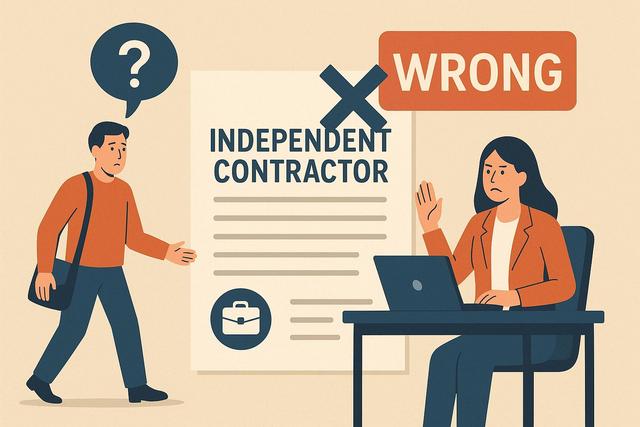
The misclassification of employees as independent contractors can lead to significant legal and financial repercussions for businesses. This guide provides an extensive overview of the consequences, preventive measures, and corrective actions to handle misclassification issues effectively.
Understanding Independent Contractor Misclassification
Independent contractor misclassification occurs when a business incorrectly labels a worker as an independent contractor rather than an employee. This practice can result in severe legal and financial consequences, including penalties from the Internal Revenue Service (IRS), Department of Labor (DOL), and other related organizations.
Criteria for Classification
The classification of a worker depends heavily on the degree of control and independence in the working relationship. The IRS uses the common law rules which fall into three categories:
- Behavioral Control: Does the company control or have the right to control what the worker does and how the worker does the job?
- Financial Control: Are the business aspects of the worker's job controlled by the payer? (how the worker is paid, whether expenses are reimbursed, who provides tools/supplies, etc.)
- Type of Relationship: Are there written contracts or employee-type benefits (i.e., pension plan, insurance, vacation pay, etc.)? Will the relationship continue, and is the work performed a key aspect of the business?
Legal Risks of Misclassification
Mislabeling employees as independent contractors can increase liability and expose businesses to a range of risks, including:
Financial Penalties
Businesses may face back taxes, fines, and interest owed for Social Security and Medicare tax, unpaid overtime, and unpaid employee benefits.
Reputational Damage
Misclassification can harm a company’s reputation with both current and potential employees, impacting hiring and retention efforts.
Legal Actions
Workers or regulatory agencies can file lawsuits or take actions that can lead to costly legal battles.
How to Avoid Misclassification
Conduct Regular Audits
Perform regular reviews of worker classifications against IRS guidelines to ensure compliance. Utilize self-assessment tools and engage external legal expertise when needed.
Educate Management
Provide training for those involved in hiring and managing contractors to ensure understanding of the classification criteria.
Develop Clear Contracts
Ensure contracts clearly outline the expectations, autonomy, and financial arrangement consistent with independent contractor status.
Corrective Measures for Misclassification
Voluntary Classification Settlement Program (VCSP)
The IRS offers the VCSP allowing businesses to reclassify workers as employees for future tax periods, reducing liability. For more information, visit IRS VCSP.
State Guidance
Consider state-specific guidelines as states may have their own criteria and programs for addressing misclassification.
Case Studies on Misclassification
Analyzing case outcomes can provide valuable insights into how misclassification is viewed legally:
FedEx Ground
In the landmark case against FedEx, drivers were found to be misclassified as independent contractors, ultimately costing the company hundreds of millions in settlements.
Uber and Gig Economy
Uber has faced scrutiny and lawsuits over the classification of its drivers, raising awareness and legal debate around the gig economy model.
Conclusion and Actionable Takeaways
Ensuring correct classification starts with understanding and aligning with federal and state guidelines. Regular audits, training programs, and a commitment to transparent contracts are vital steps. Businesses should proactively utilize IRS programs to mitigate misclassification risks. A proactive approach to this complex issue can safeguard against financial penalties and maintain positive employer-employee relationships.

