The Legal Risk of Verbal Agreements: Protecting Your Interests
- 03/27/2026 07:16am
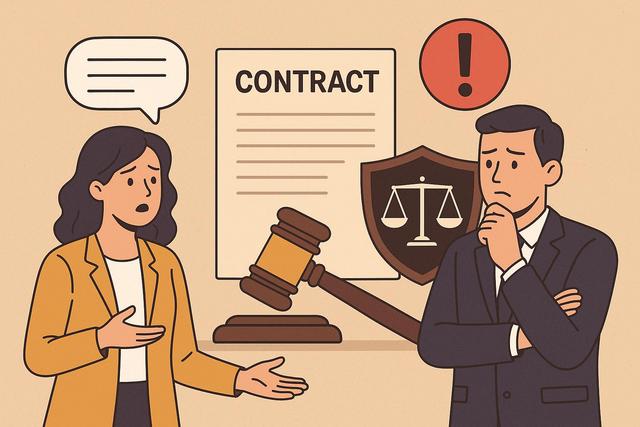
Verbal agreements, while convenient, often carry significant legal risks and uncertainties. This detailed guide explores why oral contracts can fail and how to safeguard yourself through strategic measures. Understanding the nuances of contract law and verbal agreements can empower you to make informed decisions and shield yourself from potential pitfalls.
The Nature of Verbal Agreements
Verbal agreements are contracts that are spoken, not written. Despite their informality, they are legally binding in many jurisdictions. However, they pose significant challenges, primarily around the issues of proof and interpretation.
Challenges of Proving Verbal Agreements
One of the primary challenges with verbal agreements is the difficulty of proving their existence. Unlike written contracts, oral agreements do not provide tangible evidence. Disputes often arise when parties recall terms differently, leading to "he said, she said" scenarios that complicate legal proceedings.
Real-World Example: Disputed Terms
Consider a situation where a freelance designer verbally agrees on a $10,000 fee for a project, but the client recalls $5,000. Without written evidence, settling such disputes often requires evidential testimony, which may not always be reliable or consistent.
The Interpretation Dilemma in Verbal Agreements
Words can be interpreted differently by different parties. In written contracts, terms are carefully defined. However, in verbal agreements, terms can be ambiguous, leading to potential conflicts.
Case Study: Misinterpretation in Business Deals
A supplier agrees verbally to deliver products "by next month," which the client assumes means the start of the month, while the supplier considers it by the month's end. Such ambiguities can financially impact businesses and strain professional relationships.
Legal Enforceability: Myths and Realities
Despite common myths, verbal agreements are often enforceable under law. However, the enforceability depends on specific legal standards and the contract type.
Legal Standards and Oral Contracts
For a verbal agreement to be enforceable, it must meet standard contract law requirements: offer, acceptance, intention to create legal relations, and consideration.
- Offer and Acceptance: Both parties must understand and agree on the terms.
- Intention: There must be an intention to create a legally binding relationship.
- Consideration: Something of value must be exchanged between the parties.
Exceptions to Enforceability
Certain contracts, including those involving land sales or lasting more than a year, must be in writing to be enforceable under the Statute of Frauds.
Data Points: Legal Enforcement Rates
Statistics show that disputes involving verbal agreements are less frequently resolved in favor of plaintiffs due to proof difficulties—only about 20% success rate compared to 60% for written agreements.
Protective Strategies Against Risks
Given the risks, individuals and businesses should adopt strategies to protect themselves when entering into verbal agreements.
Documenting the Agreement
To mitigate risks, convert verbal agreements into written formats whenever possible. If that's not feasible, follow up discussions with an email or message summarizing key terms.
Actionable Insights
- Use Smartphones: Record phone calls (where legal) or meetings to have evidence of discussions.
- Send Immediate Confirmations: After verbal commitments, send an email summarizing key terms, requesting confirmation from the other party.
Seeking Legal Consultation
Consulting with legal experts before agreeing verbally on significant terms can prevent misunderstandings and offer legal protection.
Strategic Advice
- Contract Lawyers: Engage professionals to draft foundational agreements or offer guidance on verbal agreement nuances.
- Arbitration Clauses: Incorporate clear arbitration methods in verbal commitments to manage disputes effectively.
Real-World Implications
Despite their informal nature, verbal agreements can have substantial real-world implications, affecting both personal and business relationships.
The Impact on Relationships
Disagreements over verbal agreements can damage professional networks and personal relations, making clear communication critical.
Case Study: Business Partnerships
In a tech start-up, founders who verbally agree on profit-sharing without documentation may later face disputes over interpretations, impacting the business's stability and growth.
Financial and Legal Consequences
Failed verbal agreements can lead to costly legal battles or financial losses, particularly when significant sums are involved.
Data Point: Litigation Costs
On average, legal fees for disputes arising from verbal agreements range from $5,000 to $20,000, depending on the case's complexity and jurisdiction.
Comparison: Verbal vs Written Agreements
Understanding the differences between verbal and written agreements helps parties make strategic choices.
| Criteria | Verbal Agreements | Written Agreements |
|---|---|---|
| Proof Requirement | Difficult to prove | Easier to demonstrate |
| Legal Enforceability | Often harder to enforce | Generally more enforceable |
| Clarity and Precision | Often ambiguous | Typically detailed and clear |
| Dispute Resolution | Potentially contentious | Easier to manage with clear records |
Conclusion: Protecting Your Legal Interests
Verbal agreements, while legally feasible, pose significant risks primarily due to challenges in proving terms and variations in interpretation. To protect your legal and financial interests, prioritize converting verbal agreements into written documents where possible, utilize technology to document discussions, and seek professional legal advice when navigating complex agreements.
Implementing Protection Measures
- Document Everything: Convert conversations into written format.
- Seek Legal Guidance: Consult experts to clarify terms and implications.
- Embrace Technology: Use tools to record critical discussions for reference.
- Know the Law: Be aware of which agreements need to be in writing.
Understanding these nuances empowers individuals and businesses to navigate the complex landscape of contract law more effectively, ensuring that verbal agreements align with their intended protection and obligations.

