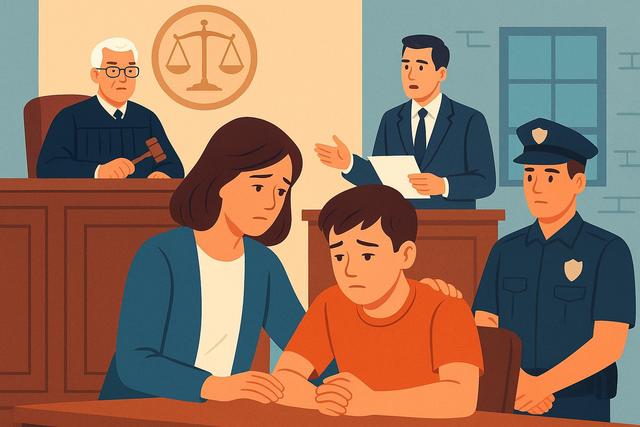
Juvenile criminal law can be complex and daunting for parents navigating the legal system. Understanding the nuances in how juvenile cases differ from adult counterparts is critical. This guide delves into the facets of juvenile law, provides real-world examples, and offers actionable insights to help you make informed decisions.
Understanding Juvenile Criminal Law
Juvenile criminal law deals with offenders under 18 years old and diverges significantly from regular criminal proceedings. Each jurisdiction may have its own age range, but the focus is typically on rehabilitation rather than punishment.
Key Differences from Adult Criminal Law
Juvenile proceedings tend to be more lenient, emphasizing rehabilitation. This stands in contrast to adult proceedings where retribution and deterrence may prevail.
Case Study: A Shift Towards Rehabilitation
In California, policy changes in the past decade have included reducing direct transfers of juveniles to adult courts, resulting in a 34% decline in juvenile incarcerations.
Jurisdictional Variations and Their Impact
Jurisdictional differences can majorly affect outcomes. States have distinct methods for handling juvenile offenses, thus consulting local laws is crucial.
Data Insights: Variation in Court Handling
The National Institute of Justice notes that some states process juveniles in adult courts for serious felonies, a practice present in 33 states.
Critical Perspective: Know Your State's Policies
A critical analysis suggests that uniform policies could enhance fairness and reduce confusion among those involved.
Role of Parents in Juvenile Cases
Active involvement of parents is often seen as beneficial in juvenile cases. Parents can influence outcomes through advocacy and ensuring legal rights are upheld.
Actionable Steps for Parental Involvement
- Consult with specialized juvenile law attorneys.
- Engage actively with probation officers and caseworkers.
Example: Successful Parent-Child Legal Collaborations
A case in New York saw parents actively argue for a diversion program, leading to a dropped charge and community service instead of detention.
Available Legal Defenses for Juveniles
Various defenses may be utilized in juvenile cases, such as lack of capacity due to age, or coercion.
Strategic Insight: Tailored Defense Strategies
Defense strategies must account for developmental psychology, thus seeking counsel experienced in juvenile defense is key.
Case Result: Impact of Psychological Evaluation
In a notable case, psychological evaluations mitigated charges against a 16-year-old by proving a lack of mature judgment capacity.
The Importance of Legal Representation
Legal representation in juvenile cases can drastically alter outcomes. One study suggests that juveniles represented by an attorney receive diversion program sentences 62% more frequently.
Fact-Based Tips for Selecting an Attorney
Ensure the attorney is experienced in juvenile law and verify their track record with similar cases.
Resource Highlight: Finding an Attorney
Websites like Avvo offer profiles and reviews of juvenile attorneys.
Long-Term Consequences and Record Expungement
While juvenile records are often sealed, implications can extend into adulthood affecting education and employment opportunities.
Navigating Expungement
Seeking expungement is on the rise, with successful removal of records in more than 70% of cases as stated by Brennan Center for Justice.
Practical Approach to Record Sealing
- File petitions early and ensure documentation is thorough.
- Consult with an attorney to navigate the nuances effectively.
Conclusion
Understanding juvenile criminal law requires awareness of its unique challenges and opportunities for rehabilitation. Key takeaways include comprehending jurisdictional differences, engaging actively as parents, and pursuing competent legal representation.
Implementation Steps
- Research state-specific juvenile laws.
- Engage a specialized attorney early in the process.
- Consider long-term effects and pursue expungement where applicable.

