Felony vs. Misdemeanor: Understanding the Key Differences
- 03/14/2025 11:17am
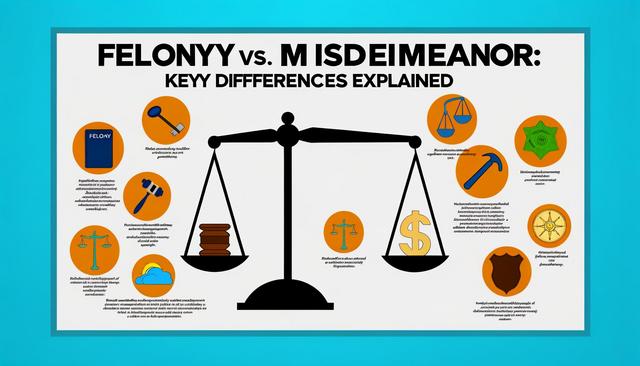
Criminal charges are broadly categorized into felonies and misdemeanors, each carrying distinct legal consequences. However, the differences between them can significantly impact the legal proceedings and sentencing. This detailed guide will explore the key differences, implications, and what they mean in the context of criminal law.
What is a Felony?
A felony is a type of criminal charge that is considered more severe than a misdemeanor. It typically involves serious offenses such as murder, rape, or armed robbery. These crimes carry heavier punishments, including lengthy imprisonment, significant fines, and long-term consequences on a person’s civil rights and societal status.
Legal Consequences of Felonies
- Imprisonment: Felony convictions can result in sentences exceeding one year, often served in state or federal prisons.
- Fines: Offenders may face significant financial penalties which can be thousands of dollars.
- Civil Rights Impact: Convicted felons often lose rights such as voting, serving on a jury, and owning firearms.
- Long-Term Consequences: A felony conviction can affect employment opportunities and housing applications due to criminal background checks.
Case Study: Impact of Felony Charges
Consider a case where an individual is charged with burglary, a common felony. Such a charge not only leads to immediate legal consequences, such as imprisonment, but also long-term life impacts, damaging personal relationships and career prospects. According to a study published by the Bureau of Justice Statistics, individuals with felony convictions face decades-long challenges in re-entering society.
What is a Misdemeanor?
Misdemeanors are lesser offenses compared to felonies. Examples include petty theft, vandalism, or first-time DUI offenses. They are punishable by shorter jail terms, usually less than a year, or monetary fines.
Legal Consequences of Misdemeanors
- Shorter Jail Time: Sentences are typically served in local jails for less than a year.
- Fines: They usually involve smaller fines compared to felonies.
- Community Service and Probation: Alternative sentencing methods such as community service or probation are more common.
- Less Severe Civil Impacts: Although a misdemeanor can show up on background checks, it usually has lesser impacts than felonies.
Misdemeanor in Practice
A notable example is shoplifting, where a first-time offender might face probation instead of jail time. Programs like pre-trial intervention are designed to rehabilitate rather than punish, emphasizing education and restitution.
Comparing Felony and Misdemeanor
Severity of Crimes
Felonies encompass the most serious crimes. Misdemeanors are less severe, often involving non-violent offenses.
Implications on Life and Rights
Felony convictions result in the loss of certain civil liberties; however, misdemeanors might only result in minor civil restrictions.
Legal Process
Felony charges entail complex legal processes, often leading to jury trials, while misdemeanors may be resolved through plea bargains or bench trials.
Financial Burden
Felonies can lead to substantial financial burdens due to higher fines and legal costs compared to misdemeanors.
Conclusion: Navigate the Legal System Wisely
Understanding the fundamental differences between felonies and misdemeanors is vital for anyone encountering the legal system. Recognizing the implications of each charge will help individuals make informed decisions and seek appropriate legal counsel. Whether one is facing a felony or misdemeanor, the gravity of the situation should prompt careful consideration of the potential long-term ramifications. Always consult with a qualified attorney to navigate these serious legal waters successfully.

