Do You Need a Trust or a Will? Pros and Cons Explained
- 06/11/2025 09:16am
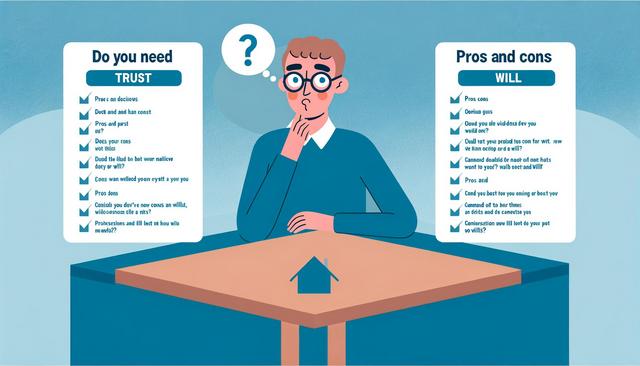
When considering the future of your estate, choosing the right legal instrument between a trust and a will is imperative. Both have distinct advantages and disadvantages that can significantly impact your financial planning strategy.
Understanding Trusts and Wills
When you delve into estate planning, trusts and wills are the two fundamental instruments to consider. Each serves its own unique purpose and can greatly affect the distribution of your assets.
What is a Will?
A will is a legal document that states your wishes regarding the distribution of your assets and the care of any minor children upon your death. It is generally straightforward to create and allows you to appoint an executor – a person responsible for carrying out the terms of your will.
Pros of a Will
- Simplicity: Wills are typically easier to set up and don't require ongoing management.
- Lower Initial Costs: Generally, drafting a will is less expensive than creating a trust.
- Ability to Name Guardians: Wills allow you to name guardians for minor children.
Cons of a Will
- Probate Process: Wills need to go through probate, which can be lengthy and expensive.
- Public Record: The contents of a will are public once it enters probate, potentially compromising privacy.
What is a Trust?
A trust, on the other hand, is a fiduciary arrangement that allows you to appoint a trustee to manage your assets on behalf of your beneficiaries. Trusts can be especially useful for minimizing taxes and avoiding probate.
Pros of a Trust
- Avoid Probate: Assets in a trust bypass probate, ensuring a quicker and smoother transfer to beneficiaries.
- Privacy: Unlike wills, trusts remain private and are not open to public scrutiny.
- Control Over Distribution: Trusts allow for more complex and tailored distribution schedules.
Cons of a Trust
- Complexity: Trusts can be more complicated to set up and manage.
- Higher Initial Costs: Establishing a trust often requires a substantial upfront investment.
Trust vs. Will: Which is Right for You?
Factors to Consider
Deciding whether to establish a trust or draft a will depends on several factors:
- Estate Size: Larger estates may benefit more from a trust due to the potential tax advantages and the ability to bypass probate.
- Privacy Concerns: If privacy is paramount, a trust is likely the better choice.
- Financial Complexity: Complex financial situations often demand the sophisticated management that a trust can provide.
Case Studies
- High Net-Worth Individual: Consider Jane Doe, a high net-worth individual with diverse assets. By setting up a revocable living trust, Jane could enable her estate to pass directly to her beneficiaries without lengthy probate.
- Average Joe: Contrast this with Joe, a middle-class worker whose primary goal is to ensure his minor children are cared for. For Joe, a simple will might suffice, allowing him to designate guardians and manage costs effectively.
Creating Your Estate Plan
Engaging with a reputable estate planning attorney can aid significantly in clarifying whether a will or trust is more appropriate for your circumstances. Here are steps to take:
- Consult an Estate Planning Attorney: Look for someone with a strong background in wills and trusts, possibly navigating websites like AVVO.
- Conduct Further Research: Resources like Nolo
- Review and Update Regularly: Estate plans should be revisited periodically or when significant life changes occur.
Conclusion and Takeaways
Whether you need a trust or a will depends on your personal circumstances, financial goals, and privacy concerns. Trusts generally offer more complexity and control but come with greater initial costs and requirements. Wills, meanwhile, are straightforward and cost-effective but come at the expense of privacy. Careful consideration and expert advice are key to creating a robust estate plan. For further reading, consult resources on estate planning or make inquiries with legal professionals.

